 PrelovedBag Malaysia
Brand Guide
How to Authenticate a Louis Vuitton Bag in Malaysia
Learning how to authenticate louis vuitton malaysia listings is a must-have skill for luxury resale buyers. When shopping the preloved bag malaysia market, Louis Vuitton is the most heavily counterfeited designer brand, with superfakes replicating everything from monogram canvas structures to factory stamp positions.
Unlike modern leather bags, Louis Vuitton classic models (like the Neverfull, Speedy, and Alma) are made of coated canvas, meaning the brand's quality is revealed in the small details. This guide breaks down these checks step-by-step to help you find a genuine second hand luxury bag and verify your next luxury bag purchase.
1. The Date Code vs. Microchip Shift
To trace the production history of a preloved Louis Vuitton bag, you need to understand when and how it was made. Louis Vuitton's verification systems are divided by a major operational change: March 1, 2021.
The Traditional Date Code System (Pre-March 2021)
Bags produced before March 2021 contain a physical date code stamped inside a pocket, on a leather tab along the interior seam, or on the lining. This code consists of two letters followed by four digits.
The two letters represent the factory code (e.g., FL, MB, SP, AR are French factories; CA, GI are Spanish; SD, LA are USA). The four digits indicate the week and year of production. For bags made after 2007:
- The first and third digits represent the week of the year (01 to 52).
- The second and fourth digits represent the year (e.g., a code like SD1148 indicates a bag made in the 14th week of 2018 at a USA factory).
If a seller lists a bag claimed to be "purchased in 2023" that has a visible date code indicating a 2015 production date, or a fake date code structure (like FL9382, which suggests a 98th week of 2032), the bag is counterfeit.
The Embedded Microchip Era (Post-March 2021)
From March 2021 onward, Louis Vuitton stopped stamping physical date codes on new bags. Instead, they embed small passive radio-frequency identification (RFID) microchips inside the lining or pockets.
These chips cannot be seen with the naked eye. While only Louis Vuitton boutique associates can scan these chips to access production logs, buyers can use smartphone apps (like "NFC Tools" or "NFC Tasks") to scan the lining. If the app detects an ISO 15693 RFID tag, it confirms a microchip is present. Counterfeits have tried placing fake microchips in easy-to-find locations, but they often lack the correct secure encoding.
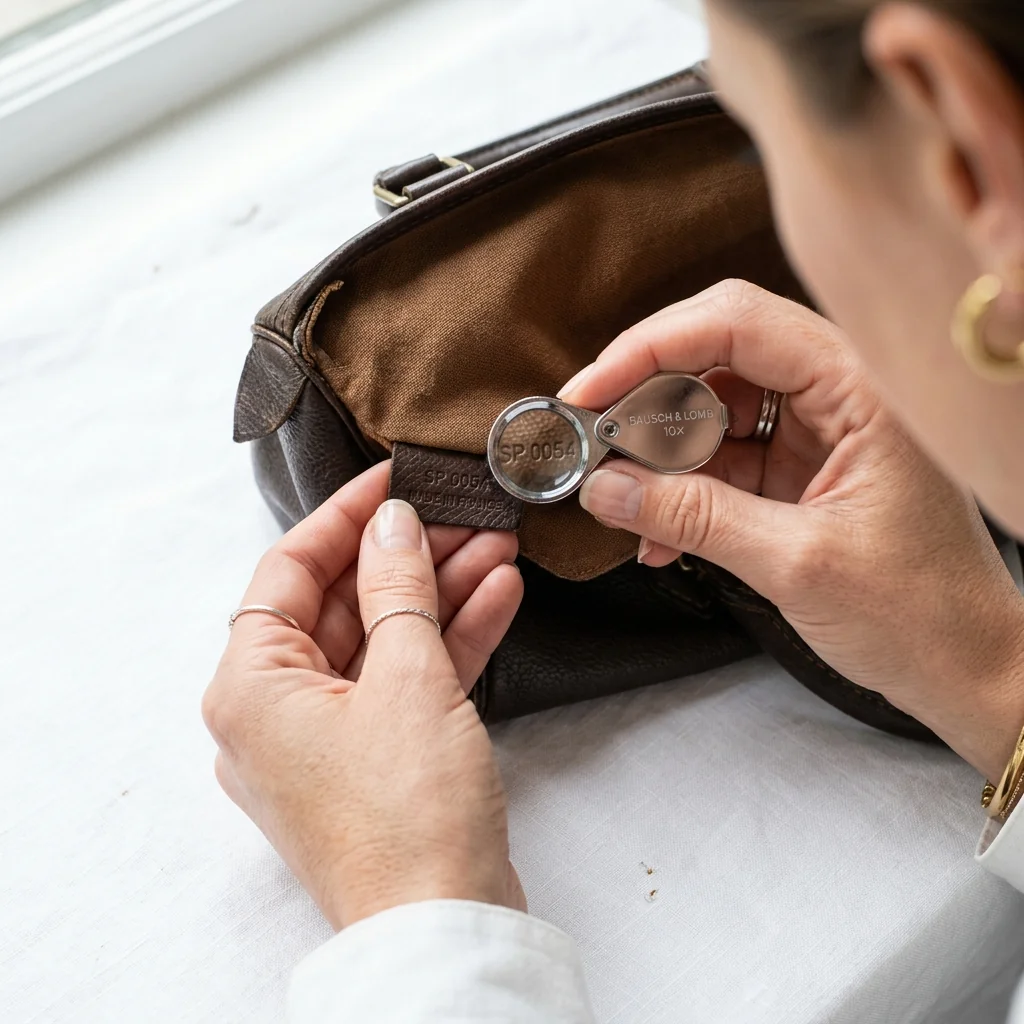 Figure 1: Authentic leather date code tab (left) vs typical fake date code tab (right).
2. Heat Stamp Typography (The Font Check)
The brand's heat stamp, typically reading "LOUIS VUITTON / PARIS / made in france" (or Italy, Spain, U.S.A.), is one of the most reliable indicators of authenticity.
Genuine Louis Vuitton heat stamps use a custom, highly specific geometric font. Counterfeiters using standard system fonts cannot replicate these details:
- The Letter L: The bottom horizontal leg is very short.
- The Letter O: Must be a near-perfect circle, looking wide and round. Fake fonts often show a narrow, oval-shaped "O".
- The Letter T: The two Ts in "VUITTON" must almost touch each other, with very little spacing between them.
- Country Lettering: In "made in france", the "m" in "made" is always lowercase, and the "f" in "france" is lowercase. The stamping must be clean, crisp, and sit deep inside the leather.
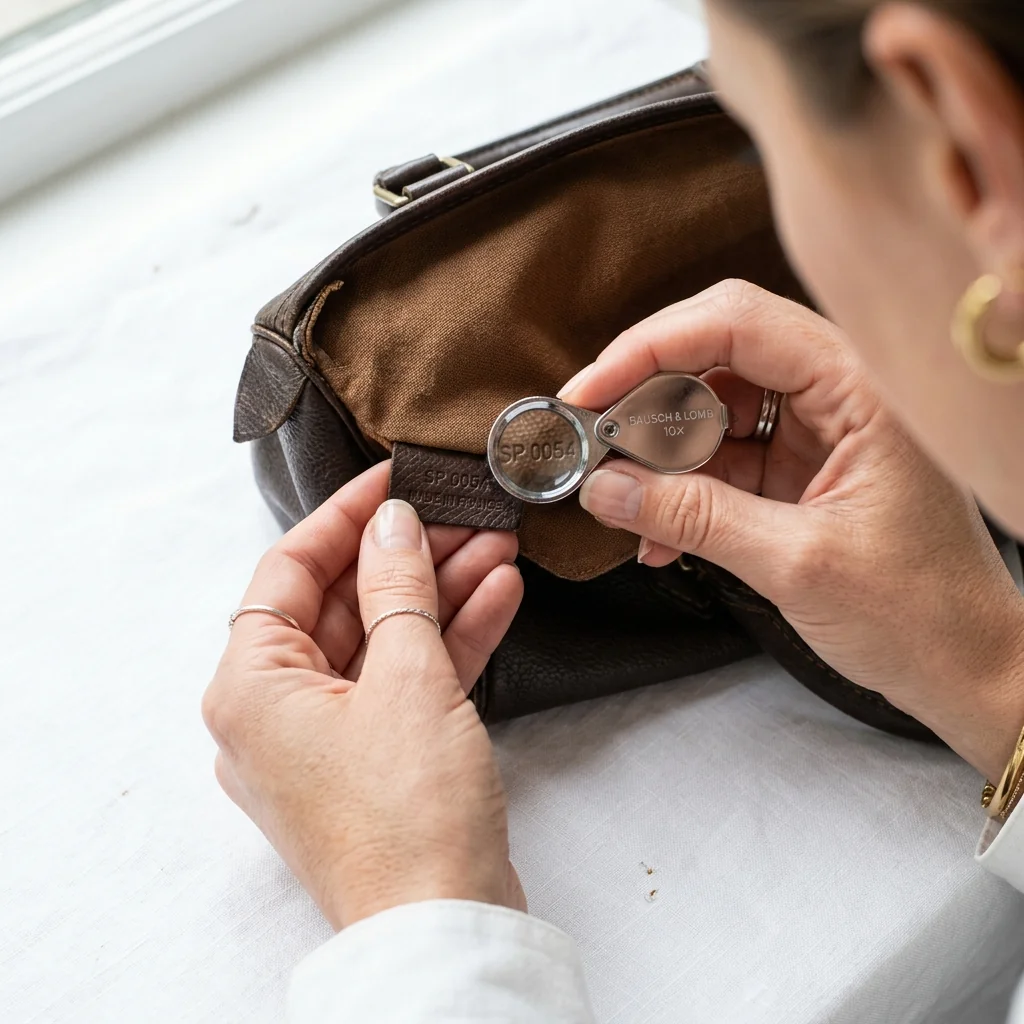 Figure 2: Genuine heat stamp font geometry (left) vs counterfeit heat stamp showing incorrect oval O's and long-legged L's (right).
3. Vachetta Leather Patina Development
Many classic Louis Vuitton canvas bags feature leather handles and trim made of untreated vegetable-tanned cowhide, known as Vachetta leather.
Authentic Vachetta leather is left untreated, meaning it oxidizes over time. When exposed to air, light, and natural skin oils, it develops a deep honey-colored patina.
Counterfeits often use cheap, synthetic leather or heavily coated split leather to save costs. This fake trim is plastic-like and does not age. It remains a chalky, pale white color even after months of use, or develops grey, dirty stains rather than a warm honey sheen.
4. Stitching Density and Angle
Louis Vuitton uses thick, durable linen thread coated in beeswax, which gives the stitches a matte, mustard-yellow appearance.
Every stitch on an authentic bag is angled slightly downward, running in a perfect, uniform line. The spacing must be consistent across the entire bag.
On fakes, stitching is often done with cheap, shiny synthetic thread that sits completely flat on the leather. Watch out for uneven stitches, loose threads, or double-stitching at the corners. These indicate a machine-sewn counterfeit produced in a high-volume factory.
5. Canvas Alignment & Structure
Louis Vuitton's classic Monogram and Damier canvases are manufactured to strict alignment standards.
The monogram print is always perfectly symmetrical. On a Speedy bag, for example, the pattern should align horizontally across side seams.
Additionally, certain models are constructed from a single continuous piece of coated canvas wrapped from front to back. In these bags (such as the Speedy 25, 30, and 40, and the Keepall), the monogram pattern will be right-side-up on the front but upside-down on the back. If a seller lists a Speedy with right-side-up logos on both sides, it indicates two pieces of canvas were stitched together at the bottom, proving it is a fake.
Photo Checklist: Ask the Seller
Before buying a preloved Louis Vuitton bag in Malaysia, ask the seller for these 5 high-resolution close-ups. Check them carefully:
- A clear close-up of the date code stamp (if pre-2021) showing the letters and digits.
- A macro photo of the interior leather heat stamp to inspect font shapes and letters.
- Photos of the vachetta leather handles, showing natural patina and stitch angles.
- A flat, straight photo of the bottom and side seams to verify canvas alignment.
- The engravings on the brass hardware (zipper pulls and rivets).